For the second year in a row, at least that i've noticed, this osprey has visited this snag at lake nacimiento to feast on the lakes fine bass and other fare. An osprey can dive down as far as three feet to catch a live fish, this spotted bass got a little to close to the surface and became lunch.
An ospreys' diet consists mainly of live fish and they are far more common in northern regions but this one found a honey hole in central california. While I was observing this one a juvenile eagle showed up and attempted to take the bass for itself. sorry no photos other than the aftermath of the unsuccesful eagle soaring overhead.
females
I'm not gonna include a lot of info about these animals simply because there is a dedicated group of individuals who donate their time and efforts to cataloging the ongoings and schedules of this group of elephant seals in san simeon california. The group refer to themselves as friends of the elephant seals and their website is elephantseal.org. Another interesting site is noaa.com where they tag and track seals with gps tags, the title is tagging of pacific pelagics.
male
mirounga angustirostris
young males
seasoned vet
The best time to witness the births taking place is in january at the elphant seal viewing area in san simeon ca. on highway 1. check on elephantseal.org for full schedule
Depending on your geographical location here in the u.s. these may be referred to as boar, feral hogs, wild hogs, or as i say simply wild pigs. They are an introduced species that has adapted well and populated to staggering numbers, and in many cases has become a nuissance animal to the agriculture industry and private landowners alike. They first showed up on our continent in the 1500's brought by spanish explorers as part of their native diet, and later planted in certain as a game animal for sport.
note the large tusks
Although not a native to our land they are still an admirable animal both adaptable and fierce. You will not find one when they are bedded down unless you accidentally stumble upon there hidden spot and its usually in thick cover, but you can spot them sometimes in the early mornings along roadways when they dont mind being spotted as they root through the ground to locate food for their highly varied diet. Eating just about everything you can shake a stick they have a distinct advantage over native animals and often compete for food with them . With sharp tusks a head hard as a rock and weight that can top 400 pounds combined with strength in numbers they usually stand a pretty good chance. Pigs can cover a 10 mile distance in a day searching for food usually close to a water source used for wallowing, hogs do not contain sweat glands so they use water as a cooling method.
tree rub
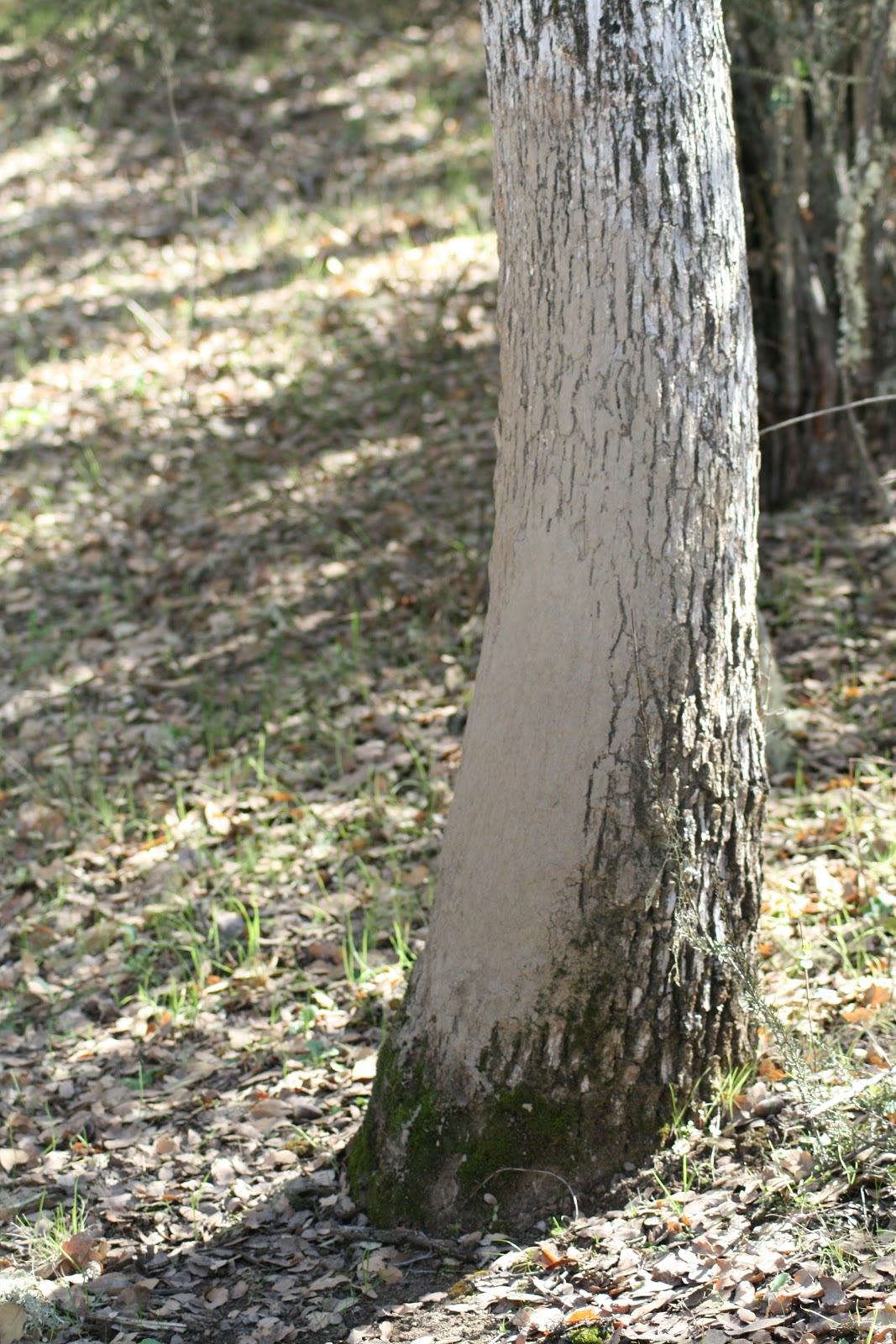
In order to find pigs you'll have to read the signs they leave behind which are usually very unsubtle. After wallowing they use nearby trees to remove the mud and get a good scratch sometimes scraping their tusks deep into the bark see below.
tusk scars in bark
The below photo shows one of the factors of why pigs are hunted down to reduce their numbers, farmers will show up in the morning to this sight in their crops and turn to trapping and hunting to protect their livelihood Even with population control efforts pigs populate so rapidly and constantly they will be a permanent part of our ecosystem whether they are liked or not.
Here is an older video that I thought was lost forever when my old video camera broke but fortunately i had loaded on my computer and forgot about. This is the coastal subspecies of san luis obispo county. king snakes are common in our area and we are glad to have them, they have a broad diet that includes rattlesnakes which helps to keep balance in our ecosystem. taxonomy name is lampropeltis getula. This particular snake crawled into the hole and a mouse popped out of another exit hole.
I was lucky enough to get a wandering gray fox on the camera trap that i had set to target bobcat and pigs. I wish he was a little more nonchalant about the scent lure that i placed on the rock but either way I'll take it. Although i knew the gray fox were active in our area this is the first confirmation I've had of one. I've seen and got photo of the red fox multiple times but the gray fox are primarily nocturnal making them more elusive. ( see older posts red fox for photos). I'm pretty sure this is a male due to the large size.
So often i see coyotes and take them for granted, I've only photographed them once before and never did anything with the photos. Most people have a very low opinion of coyote because of the nuissance role they have played towards ranchers but what most people dont know is they are an extremely beneficial animal to have in the ecosystem. They help keep down the rodent population which in turn prevents fleas, ticks, and disease. Their taxonomic name is canis latrans which means barking dog in latin. I've always liked their cool nickname brushwolf. I was suprised to learn they only have a 15 square mile radius they roam. A very fast animal they can run over 40 miles per hour and leap a distance over 12 feet, and live an average of 10 years. I've been checking potential burrow sites to find a litter but no luck yet. i seen one of these guys chase down a ground squirrel and pull it out of the hole. In the fall every time the moon shines there's a pack of them that sounds off with several different kinds of vocal calls. The coyotes in our area have more of the desert colors, as opposed to the mountain variety that are darker, we seen a coyote in mammoth california in the winter time that had such a full coat and was so big and healthy that it looked more like a wolf rather than the coyotes were used to seeing.
One of my favorite wild animals in our area and one that I have posted here before from my trail cameras. the taxonomy name is lynx rufus with a sub species here in california of lynx rufus californicus. these photos were taken in cambria california while this bobcat was stalking some gopher holes waiting for one to pop its head up, a traight that is also done by domestic house cats now.
Bobcats are very stealthy often crouching down and waiting for there prey to get near and then pouncing on it, and able to jump 10 feet. I usually only see bobcats near the road when i'm driving but if i do notice them in nature they are usually displaying this behaviour.
This is a resident bobcat i see occasionally in person near lake nacimiento california and somewhat commonly on my trail cameras. with a relatively small range once you find one you can usually count on seeing it again. i've read they travel 2 to 7 miles a night to hunt and live on average 6-12 years of age. I've had one jump out of a tree in front of my truck when i was driving through, and another let me follow it around for awhile just as curious about me as i was about it. This bobcat in these videos lives in an area rich with ground squirrels and cotton tail rabbits which i also get frequently on video or picture, the cat also shares this area with wild boar, coyote and fox.