Sunday, March 31, 2013

Shell creek

 Right off hwy 58 in san luis obispo county lies shell creek rd. next to the avenales wildlife area. We visit this area every spring to see the abundant and numerous species of wild flowers that occur along the roadside. The variety of wildflowers that occur in the same area together is what keeps us coming back every year. However the flowers are rain dependent and with our light rainfall this year the season and multitude abreviated in comparison to wetter years.


 I got a chance to walk the dry creek bed while the kids were occupied with their mother and was briefly visited by this merlin falcon with snake of some sort gripped in its talons. I was pretty stoked on the sighting since these are only here in the winter and spring is growing long. It took a couple bites from the snake and then i think the glare from my sunglasses on my hat scared it off. It flew off toward a fence line where it was harassed by a redtail hawk trying to steal its meal, I started in that direction to try and photograph the action when i spotted this bullocks oriole shown below.


 When most all wildlife native to our area seems to be wearing camoulflage for concealment it's nice to see something so tropical looking like this bullocks oriole. The pictures dont really do justice to the fluorescent orange this oriole had. Hopefully i will be returning to shell creek road soon and hopefully these visitors will still be around as the orioles are only here in the spring and summer and then off to south america for our winter.


Saturday, March 23, 2013

Cedar Waxwing

 A winter visitor to the central coast of california the cedar waxwing is a nice addition to our local avian scene. Im posting these photos a little late they were actually taken in january. It was easy to find this flock as they were quite loud and flying back and forth from the toyon bushes to a tall pine to consume their pickings. A unique bird that can survive solely on fruit but i wish they would stick around here a little longer and help thin out the mistletoe in the oakforests because they are known to eat that as well. unlike other birds who seperate the nut from the fruit they simply swallow the berries whole and pass the seeds.
getting ready to swallow whole


bombycilla cedrorum


Monday, March 11, 2013

Elk tamper

 I arrived to check my camera only to find the angle had been altered and it was pointing into the trees. I had an idea what it was, the elk around here have proven to be really curious and funny animals. you'll notice the first one is a bull elk that has shed its rack, then I think the nudger is the same one with its small antlers growing back. below are a couple older trail cam photos of the same group of elk for reference.

Tuesday, March 5, 2013

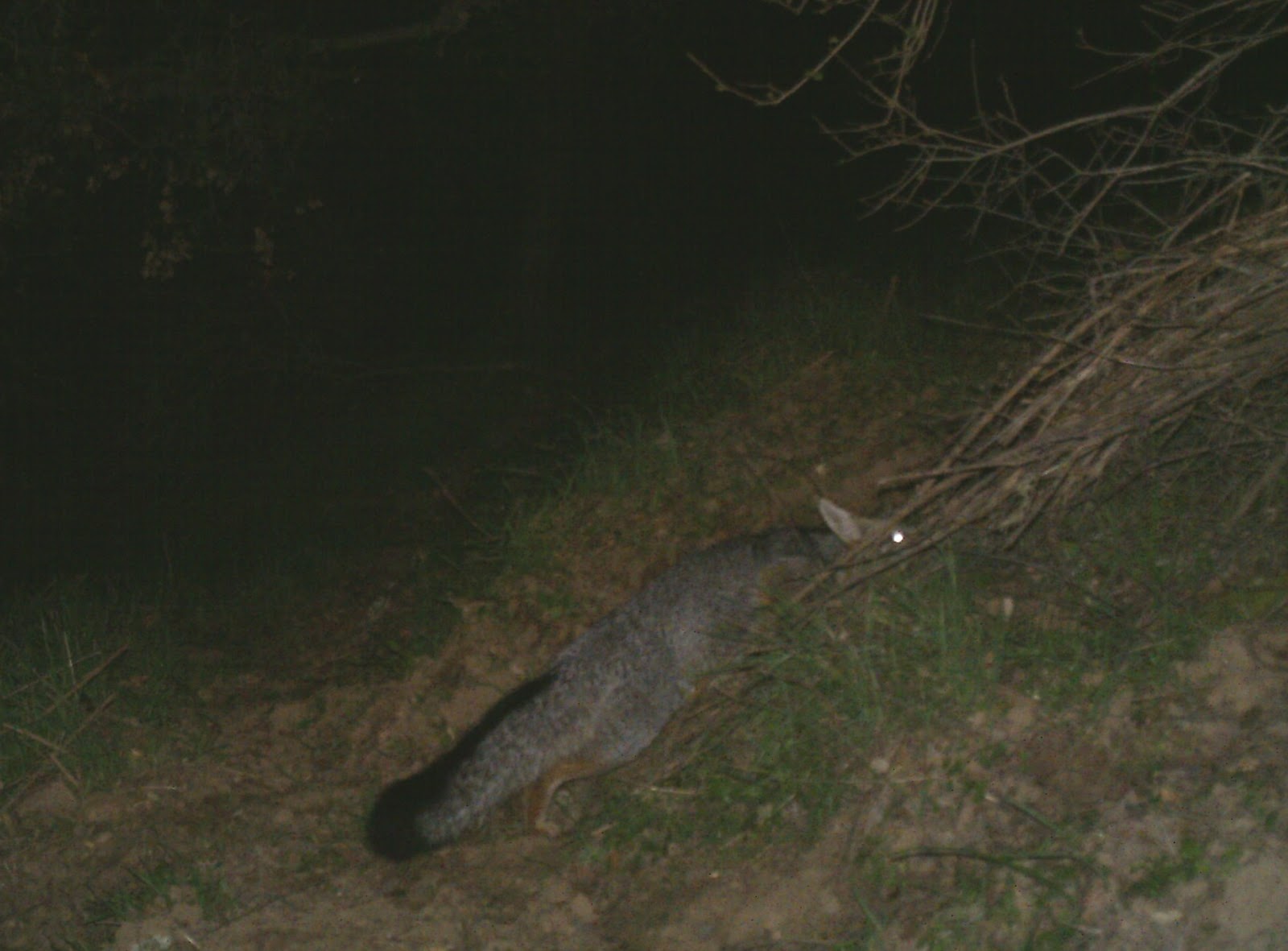
Grey fox 2


 this is from a camera trap set in paso robles california that included striped skunk, mule deer and domestic cow. but most noteworthy this gray fox, native to california but under increasing pressure from the introduced eastern redfox that has been competing for territory and prey. The grey fox is becoming one of my favorites.


Monday, February 18, 2013

Osprey

 For the second year in a row, at least that i've noticed, this osprey has visited this snag at lake nacimiento to feast on the lakes fine bass and other fare. An osprey can dive down as far as three feet to catch a live fish, this spotted bass got a little to close to the surface and became lunch.
 An ospreys' diet consists mainly of live fish and they are far more common in northern regions but this one found a honey hole in central california. While I was observing this one a juvenile eagle showed up and attempted to take the bass for itself. sorry no photos other than the aftermath of the unsuccesful eagle soaring overhead.
pandion haliaetus


juvenile bald eagle


san simeon elephant seals giving birth

females
I'm not gonna include a lot of info about these animals simply because there is a dedicated group of individuals who donate their time and efforts to cataloging the ongoings and schedules of this group of elephant seals in san simeon california. The group refer to themselves as friends of the elephant seals and their website is elephantseal.org. Another interesting site is noaa.com where they tag and track seals with gps tags, the title is tagging of pacific pelagics.

male

mirounga angustirostris

young males


seasoned vet
 The best time to witness the births taking place is in january at the elphant seal viewing area in san simeon ca. on highway 1. check on elephantseal.org for full schedule
beginning of birth


first breath


nursing

Monday, February 11, 2013

wild pigs

sus scrofa
 Depending on your geographical location here in the u.s. these may be referred to as boar, feral hogs, wild hogs, or as i say simply wild pigs. They are an introduced species that has adapted well and populated to staggering numbers, and in many cases has become a nuissance animal to the agriculture industry and private landowners alike. They first showed up on our continent in the 1500's brought by spanish explorers as part of their native diet, and later planted in certain as a game animal for sport. 
note the large tusks
Although not a native to our land they are still an admirable animal both adaptable and fierce. You will not find one when they are bedded down unless you accidentally stumble upon there hidden spot and its usually in thick cover, but you can spot them sometimes in the early mornings along roadways when they dont mind being spotted as they root through the ground to locate food for their highly varied diet. Eating just about everything you can shake a stick they have a distinct advantage over native animals and often compete for food with them . With sharp tusks a head hard as a rock and weight that can top 400 pounds combined with strength in numbers they usually stand a pretty good chance. Pigs can cover a 10 mile distance in a day searching for food usually close to a water source used for wallowing, hogs do not contain sweat glands so they use water as a cooling method.
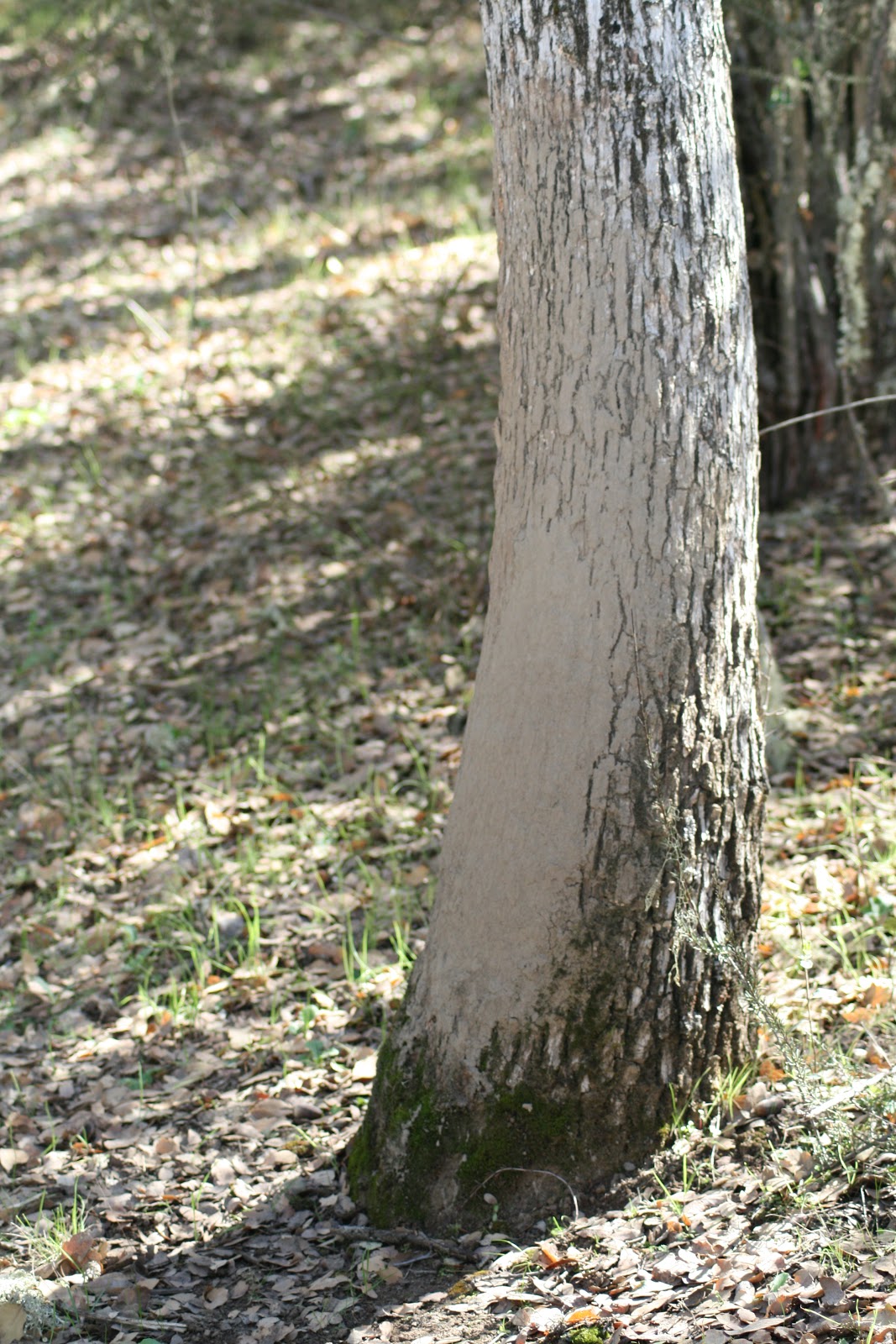
tree rub
 In order to find pigs you'll have to read the signs they leave behind which are usually very unsubtle. After wallowing they use nearby trees to remove the mud and get a good scratch sometimes scraping their tusks deep into the bark see below.
tusk scars in bark
 The below photo shows one of the factors of why pigs are hunted down to reduce their numbers, farmers will show up in the morning to this sight in their crops and turn to trapping and hunting to protect their livelihood Even with population control efforts pigs populate so rapidly and constantly they will be a permanent part of our ecosystem whether they are liked or not. 
rooted up earth